 KidneyCats
 Kidney diets: what matters, and what to do when she refuses
The short answer
A therapeutic kidney diet is the one dietary change with good evidence behind it, and it works mainly by lowering phosphorus, not by lowering protein. It's also the thing cats refuse most often. Canned beats dry, and a cat eating an ordinary food beats a cat refusing the correct one.
What is the best food for a cat with kidney disease?
The best food is a canned therapeutic kidney diet. The best food for your cat is whichever one she'll actually eat, and those two sentences are the entire subject.
I'll give you the evidence, the order I'd try things in, and what to do at the point where she turns her back on the expensive can. That last part is where most people end up, and it's where the internet is least useful.
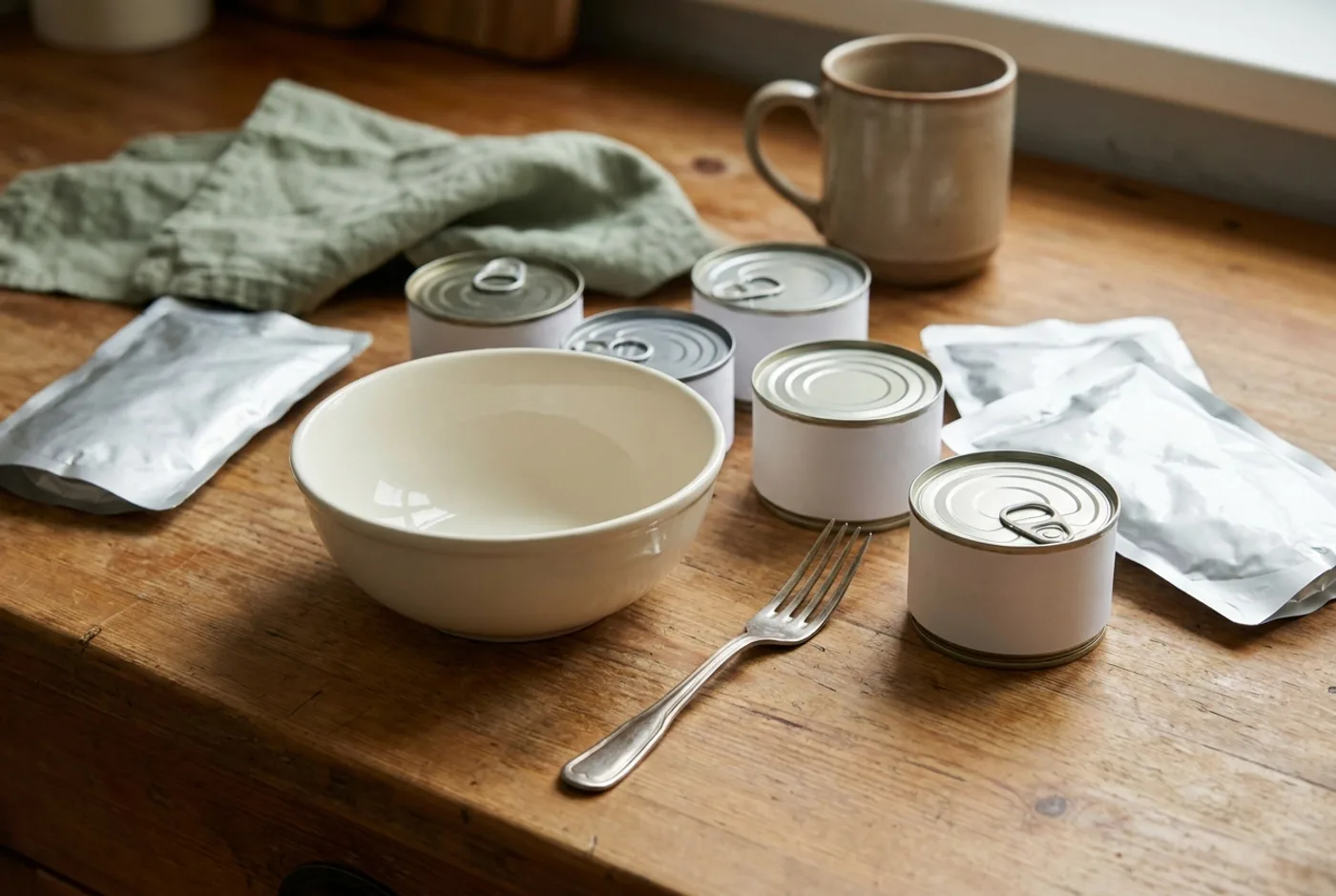
What a kidney diet is actually changing
People assume "kidney diet" means "low protein". It's a reasonable guess and it's mostly wrong.
So it isn't one change, it's five, and the phosphorus one carries most of the weight.
Do they actually work
Yes, and I'm unusually confident saying so, because this is one of the few areas in feline medicine where the studies are clear and they agree with each other.
Cats fed a therapeutic renal diet have fewer uremic crises and live longer than cats kept on ordinary maintenance food. Not marginally. It's the most evidence-backed thing you can do at home for a cat with this disease.
Which is the reason I'll spend three weeks coaxing a cat onto one rather than three days, and the reason I care so much about not burning it with a bad first experience.
The protein question, properly answered
This deserves its own section because the wrong version of it does real harm.
The instinct behind low protein is sound: protein produces nitrogen waste, damaged kidneys struggle to clear it, so less protein means less waste. That part's true, and it's why these diets are moderately reduced.
What's not true is that lower is always better. Cats are obligate carnivores and they hold their muscle with dietary protein. Restrict it too hard and she loses muscle mass, which makes her weaker, makes her look worse, and confuses her bloodwork, because creatinine comes from muscle and a wasted cat can show a deceptively low number while doing badly.
There's also a real problem hiding in the vagueness: thin, muscle-wasted kidney cats do worse. Keeping weight on her is a treatment goal in its own right.
So: moderate reduction, high quality, and phosphorus as the thing we're really chasing. Don't buy a "senior" or "light" food and use it as a kidney diet, and don't home-restrict protein because a forum told you to.
Canned or dry
Canned, and it isn't close.
This is why the ordering on the start here page looks the way it does, and it's worth repeating here because people get it backwards:
Which brands
The three with the real evidence behind them are the prescription renal diets from Hill's (k/d), Royal Canin (Renal), and Purina (NF Kidney Function). There are others, including Blue Buffalo's KM and some veterinary-exclusive lines, and Rayne makes options for cats who won't touch the big three.
They're prescription because they're therapeutic foods that would be actively wrong for a healthy cat, not because anyone's protecting a margin.
Practical notes that matter more than the brand:
- Each brand does several textures and flavors. A cat who refuses Royal Canin pate will sometimes eat the same brand's loaf or the chunks in gravy without hesitating. Ask your vet for samples before you buy a case. Every clinic has them and most will hand them over.
- The early-stage versions of these diets are less aggressively restricted and are usually more palatable. If she's stage 2, ask whether an early renal formulation is appropriate, because there's no sense fighting her with a stage 4 recipe.
- Buy small until you know. A single case of refused food is a lesson. Four cases is a cupboard you resent.
How to transition without wrecking it
Slowly. Slower than you think, and never on a bad day.
Mix a spoonful of the new food into her usual food. Hold that ratio for three or four days. Increase it slightly. If she balks, go back to the last ratio she accepted and stay there longer. Two to three weeks to a full switch is normal, and there's no prize for finishing early.
Two rules that save people weeks of grief:
Never introduce it while she feels sick. Cats attach nausea to whatever they last ate and they hold that grudge for a long time. Introducing the kidney diet during a bad week is the single most reliable way to make it permanently unusable. Get her nausea treated first, then bring the new food in when she's feeling better.
Never starve her into it. Not for a day. A cat who stops eating entirely for two or three days risks hepatic lipidosis, a liver problem that turns one illness into two. And a hungry standoff teaches her that the new bowl means hunger.
Warm it slightly, serve it in a wide shallow dish, take it up after twenty minutes rather than leaving it to go stale. All the ordinary tricks are on the appetite page and they all apply here.
When she simply won't
Some cats won't, at any dilution, ever. That's a normal outcome and not a failure of technique.
The plan then, in order:
- Tell your vet rather than quietly giving up, because the alternative route needs a prescription.
- A phosphorus binder in the food she does like. This is the workaround, and it's a good one. A powder mixed into every meal traps phosphorus in the gut so it never reaches her blood. It recovers a real share of the benefit of the diet.
- Choose the best ordinary food you can get her to eat, which mostly means canned rather than dry, and something without a phosphorus-heavy ingredient list. Your vet can point at two or three.
- Keep her weight up. A cat eating enough of an imperfect food beats a cat eating too little of the right one.
Treats, human food, and the things she begs for
A few treats won't undo a kidney diet. Two things are worth knowing.
Most commercial cat treats are phosphorus-heavy, particularly the dental ones and anything fish-based, and a cat getting a dozen a day is meaningfully undoing the diet. A couple is fine. A dozen isn't.
The ones I'd steer around: cheese, deli meat and processed human food, which are salty and phosphorus-rich; fish-based anything as a daily habit; and milk, which most cats don't digest well anyway. Small amounts of plain cooked chicken or turkey are a reasonable treat and useful for hiding tablets. Nothing with onion or garlic in it, which rules out most gravies and most baby food.
And at the very end, none of this applies. If she's in her last days, let her eat the tuna. That's on the quality of life page and I mean it there.
Raw diets, and cooked homemade
I'm going to be direct here, because I don't think a soft answer serves you.
Don't feed raw to a cat with kidney disease. Raw meat carries salmonella, campylobacter and listeria, and this is an older animal with reduced organ function whose immune system does not need that fight. She can also shed those organisms into your house. On top of that, raw diets have no phosphorus control at all, which means the one intervention with real evidence behind it is off the table. There's no version of this where the trade makes sense.
Cooked homemade can be done properly, and occasionally it's the answer for a cat who refuses everything commercial. But it has to come from a board-certified veterinary nutritionist working from her actual bloodwork, not from a recipe on a forum. Phosphorus is invisible in a home kitchen, and a well-meaning homemade diet is one of the more common ways I see a kidney cat's numbers quietly get worse. If you want to go that way, ask your vet for a referral to a nutrition service. Several run by email and it costs less than people expect.
What to actually do this week
If she's newly diagnosed and feeling reasonably well: ask for samples of two or three canned renal diets, pick the one she shows any interest in, and start mixing a spoonful into her normal food. Three weeks is your timeline.
If she's feeling rough: leave the food alone entirely. Get the nausea and the hydration sorted first, then come back to this page. Food changes are a week-three job, not a day-one job, and that order is on the first thirty days page.
Questions people ask me about this
- What is the best food for a cat with kidney disease?
- A canned therapeutic renal diet, if she'll eat it. The prescription diets from Hill's, Royal Canin and Purina are the ones with survival evidence behind them, and canned adds water to every mouthful. If she refuses, any canned food she likes plus a phosphorus binder is the next best thing.
- Do kidney diets actually work, or is it marketing?
- They work, and it's one of the few claims in this area with real studies underneath it. Cats on a therapeutic renal diet have fewer uremic crises and live longer than cats on maintenance food, and the lower phosphorus is doing most of that. It's the best-evidenced thing you can do at home.
- Should I feed a low-protein diet for kidney disease?
- Not aggressively, and this is the misunderstanding I meet most. These diets are moderately reduced with high-quality protein, and phosphorus is what's actually being chased. Cutting protein hard costs her muscle she can't spare, and a wasted cat does worse rather than better. Never restrict protein on your own.
- Is canned or dry better for a cat with kidney disease?
- Canned, and it isn't close, mostly because of water. She can't concentrate her urine, so she loses water all day whether she drinks or not, and roughly three quarters of a can is water. A canned renal diet gets you both at once.
- My cat won't eat the kidney diet. What now?
- Stop pushing, because pressure is how a food gets refused permanently. Go back to what she'll eat, get her nausea treated, and try again in a week or two with a spoonful stirred in. If it's still no, a binder in food she likes recovers much of the same benefit, and your vet needs telling rather than left to guess.
- Can I feed a raw or homemade diet instead?
- Not raw, and I won't hedge on that. Raw carries salmonella and company, this is an older cat with reduced function who doesn't need the fight, and there's no phosphorus control in it either. Cooked homemade can be done, but only on a recipe from a veterinary nutritionist, because guessing at phosphorus undoes the whole point.
Medically reviewed by Dr. Steve Pelton, last updated . First published . Reviewed quarterly.