 KidneyCats
 What chronic kidney disease actually is
The short answer
Chronic kidney disease means your cat's kidneys have permanently lost working tissue and can't filter waste out of her blood the way they used to. Chronic means it happened slowly and it won't reverse. In a great many cats it's manageable for years, and in all of them it moves in one direction.
What is chronic kidney disease in cats?
You've probably already found ten different explanations of this, most of them either three words long or written for veterinary students. Here's the version I'd give you in the room.
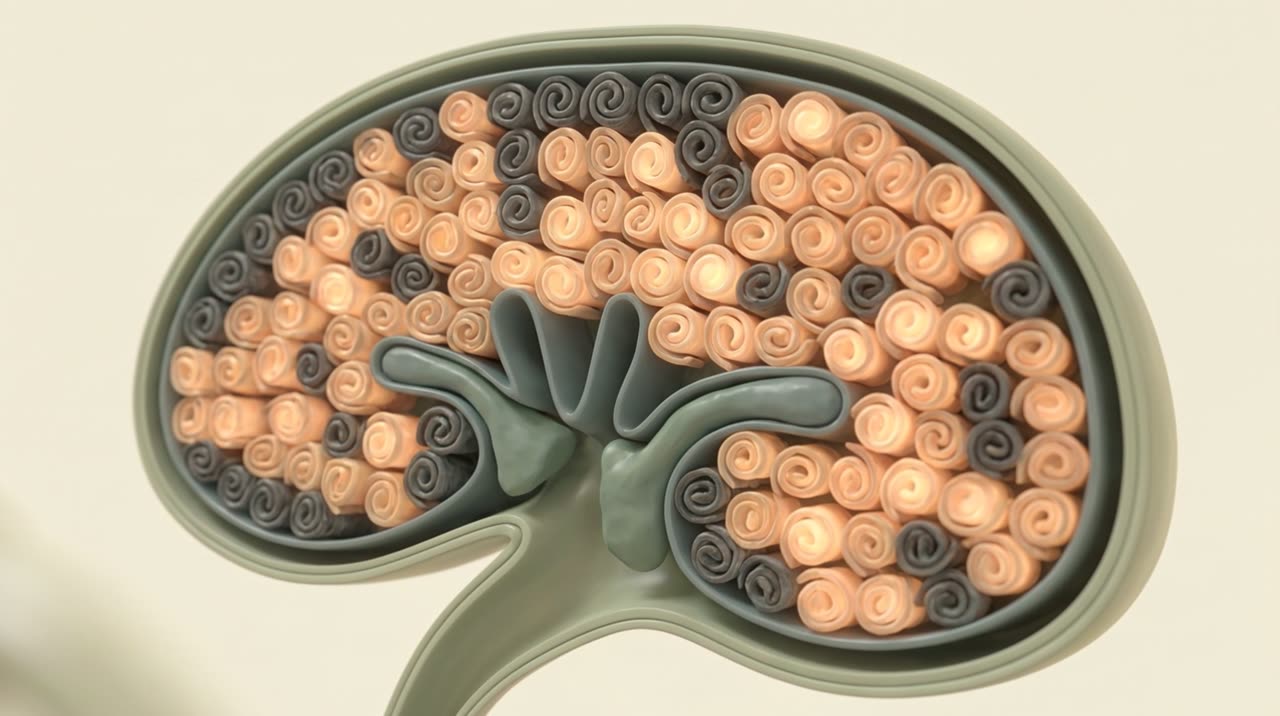
Your cat's kidneys are filters. Blood goes in, waste and surplus water come out as urine, and the things she needs stay in. Chronic kidney disease means a good number of those filters have stopped working and won't be coming back.
That's the whole idea. Everything else on this site is a consequence of it.
What the kidneys were doing for her
Filtering waste is the job everyone knows about. The kidneys do four more things that matter just as much once they start failing, and each one explains a symptom you'll meet later.
Why she looked perfectly well until last week
This is the part that makes people feel they missed something, so let me deal with it directly. You almost certainly didn't.
Kidneys are built with enormous spare capacity. A cat can lose something in the region of two thirds of her total kidney function before her blood values move outside the normal range at all. She spends that whole period compensating, quietly and effectively, by drinking more and passing more urine.
So by the time a routine senior panel catches it, or by the time you notice she's at the water bowl more, the process has been running for a long while. She wasn't well last month and ill this month. She was compensating last month, and she's run out of margin now.
The two earliest signs are drinking more and urinating more, and both are easy to miss. A cat with a covered litter box, a cat who goes outside, a cat in a house with three other cats, a cat who drinks from the bath tap when nobody's watching. Nobody spots those reliably. Vets don't either, which is why we screen with bloodwork instead of asking you to watch.
Why it can't be reversed
The filtering units are called nephrons, and each kidney has a few hundred thousand of them. When a nephron dies it isn't replaced. There's no mechanism in a cat, or in us, for growing new ones.
The surviving nephrons take on more work, which keeps things looking normal for a long time and is exactly why the disease is so quiet early on. It also means that as more are lost, the remaining ones are running harder, which is part of why the disease tends to accelerate rather than hold still.
So there's no treatment on this site, or anywhere, that grows kidney tissue back. Anything you read that claims otherwise is selling something.
What we can actually change is two things, and they're worth more than they sound:
- How she feels. Nausea, dehydration, high phosphorus, low potassium, high blood pressure and anemia are all treatable, and they're what make a kidney cat miserable.
- How fast she loses the rest. Controlling phosphorus and treating protein loss and hypertension slow the decline. That's not a small win. That's years, in some cats.
Chronic or acute, and why your vet keeps asking
These are two different problems that can look similar on a lab sheet.
Acute kidney injury happens over hours or days. A lily chewed in the kitchen, antifreeze, a urinary blockage, a bad drop in blood pressure, certain medications. It's an emergency, and because the tissue may be stunned rather than dead, some of it can recover.
Chronic kidney disease has been building quietly for months or years. It doesn't recover.
Your vet cares which one she's dealing with because the urgency and the outlook differ enormously. And a cat can absolutely have both at once: a chronic kidney cat who then gets dehydrated, or picks up a kidney infection, or eats something she shouldn't. That combination is common, it looks like a sudden collapse, and the acute part is often fixable. Which is why a cat who suddenly gets much worse deserves a proper workup rather than a shrug.
There's more on that on the crisis page.
Is it my fault, and is it hereditary?
Almost certainly not your fault. In most cats we never identify a single cause, and age accounts for most of it. Persians and a few related breeds carry a genuine inherited kidney condition, and past urinary blockages, infections, toxins and high blood pressure all contribute in individual cats.
The food she ate is very unlikely to be the reason, and vaccinating her on a normal schedule is not the reason either. That whole question is worth its own page, and it has one: why did my cat get this.
What "manageable" actually means
I use that word carefully, so here's what I mean by it.
It doesn't mean cured, and it doesn't mean she'll be exactly as she was. It means most kidney cats can be kept comfortable, eating, and interested in their own lives for a long stretch, using things you can do at home: the right food where she'll accept it, water, a phosphorus binder, nausea control, and fluids under the skin if it comes to that.
It also means the work is mostly unglamorous and mostly yours. Weighing her weekly. Giving a tablet at the same time each day. Noticing on a Tuesday that she's eaten less for three days running and phoning about it instead of waiting for the recheck.
That's the job. It's tedious and it's genuinely effective, and the fact that you're reading this at all is the strongest predictor I know that she'll do well.
Where to go from here
If you've just been handed the diagnosis, the useful next step isn't more reading about the disease itself. It's the seven practical things, in order, on the start here page.
If you want to understand her particular situation, the two pages that do that are her IRIS stage and her bloodwork, translated.
Questions people ask me about this
- What is chronic kidney disease in cats?
- Her kidneys have permanently lost working filters, so waste stays in her blood and water she ought to be keeping leaves in her urine instead. Chronic means it built slowly and it stays. Nothing was caught and nothing is contagious.
- Is chronic kidney disease the same as kidney failure?
- Same organ, same problem, older word. Failure sounds like something that has already happened, and most cats are diagnosed years ahead of that, which is why the profession moved off the term. What gets done about it is identical either way.
- Why did my cat seem completely fine until last week?
- Kidneys carry enormous spare capacity, so roughly two thirds of the tissue can be gone before a blood value moves at all. She spent that stretch compensating, mostly by drinking more, which almost nobody catches at home. Vets don't catch it by looking either, which is why senior cats get screened with bloodwork.
- Can kidney damage in cats be reversed or healed?
- No. Nephrons don't grow back, in a cat or in you or in me, so anything advertised as regrowing kidney tissue is selling you something. What does move is how she feels and how fast she loses the rest, and in some cats that difference is measured in years.
- Is it different from acute kidney injury?
- Acute injury arrives in hours, usually from a toxin, a blockage or a collapse in blood supply, and some of it can come back because the tissue may be stunned rather than dead. Chronic disease has been building for months or years and doesn't come back. She can have both at once, which is why a sudden crash gets a workup instead of a shrug.
- Will my other cats catch it?
- No, there's nothing to catch. An organ wearing out isn't an infection. If the others are also getting on, though, have them screened, because the main reason she has this is age and they've had the same birthdays.
Medically reviewed by Dr. Steve Pelton, last updated . First published . Reviewed quarterly.