 KidneyCats
 IRIS stages 1 to 4, in plain English
The short answer
IRIS staging is how vets describe how far your cat's kidney disease has gone, from stage 1, the earliest, to stage 4, the most advanced. It's based on creatinine and SDMA, measured when she's well hydrated and not sick with something else. The stage guides her treatment. It isn't a countdown.
What are the IRIS stages of kidney disease in cats?
Someone said "stage 3" to you, and then you got home and typed it into a search bar at eleven at night. That's usually how people arrive on this page.
So the first thing to say is what the stage is for. It's a shared description, so that any vet who opens her file knows roughly what they're dealing with, and so treatment decisions follow a consistent map instead of somebody's instinct.
It's a description of where she is right now. It's not a prediction and it's not a clock.
IRIS stands for the International Renal Interest Society, a group of veterinary kidney specialists who publish the staging system and the treatment targets that go with it. You'll see the same system called IRIS kidney staging, IRIS renal staging, or IRIS CKD staging, and it covers dogs too, with different numbers. Your vet is following their published guidelines, not making it up per patient, and that's a good thing.
The four stages
The stage comes off two blood values read together: creatinine, a waste product that healthy kidneys clear, and SDMA, a newer marker that rises earlier and isn't thrown off by muscle loss. The chart below is the whole classification for cats, in the mg/dL units most US labs report, with the µmol/L equivalents underneath.
The stage, from two blood markers
-
Stage 1
- Creatinine
- under 1.6 mg/dL under 140 µmol/L
- SDMA
- under 18 µg/dL
Damage is present but blood values are still normal. Found by SDMA, urine protein, or dilute urine.
-
Stage 2
- Creatinine
- 1.6 to 2.8 mg/dL 140 to 250 µmol/L
- SDMA
- 18 to 25 µg/dL
Mild, and where most cats are diagnosed. There's a lot of time here.
-
Stage 3
- Creatinine
- 2.9 to 5.0 mg/dL 251 to 440 µmol/L
- SDMA
- 26 to 38 µg/dL
Moderate. Where cats start to feel it, and where most of the useful work happens.
-
Stage 4
- Creatinine
- above 5.0 mg/dL above 440 µmol/L
- SDMA
- above 38 µg/dL
Advanced. The focus moves to how she feels, and comfort is very much treatable.
If the two markers disagree on separate checks, IRIS says to stage and treat by the higher of the two. A thin cat's creatinine flatters her; SDMA doesn't.
Substage: urine protein (UPC)
- under 0.2 Non-proteinuric
- 0.2 to 0.4 Borderline
- above 0.4 Proteinuric
Substage: blood pressure, mmHg
- under 140 Normotensive minimal risk
- 140 to 159 Prehypertensive low risk
- 160 to 179 Hypertensive moderate risk
- 180 and up Severely hypertensive high risk
Cats at stage 1 look completely well, and most stage 2 cats were only caught because somebody noticed the water bowl emptying faster. Stage 3 is where cats start to feel it: weight loss, a patchy appetite, nausea, a duller coat. By stage 4 the signs are usually obvious, and the focus shifts toward how she feels rather than how the disease behaves.
Worth a sentence on that higher-marker rule, because it answers a common confusion. If her SDMA says stage 3 and her creatinine says stage 2, and it does that on more than one check, she's treated as stage 3. That isn't the lab hedging. Creatinine leans on muscle, SDMA doesn't, and an older cat who has lost muscle needs the second marker to tell the truth about her kidneys.
One thing that trips people up on their own lab sheet, and it isn't an error on either side. Your lab flags SDMA as high above 14, while stage 2 on the chart above doesn't begin until 18. Both numbers are right and they answer different questions. Above 14 is the level IRIS says can be used to diagnose early kidney disease, so it's the number that starts the conversation. 18 is where the second band begins. A cat sitting at 16 with a red HIGH printed next to it is a real finding worth asking about, not a flag you can dismiss because this page says 18.
Put her number on the line
Drag to her creatinine, or type it in. This does the same lookup as the four bands above, and adds where inside the band she sits.
mg/dL
Stage 2
Was she well when this was drawn?
The four bands, in mg/dL. Find the one your cat's creatinine falls inside, then read the section underneath on why the stage she was given might not be the right one. Both units are listed in full in the board above.
Read her numbers
Type what is on the sheet. This does the same lookup as the IRIS chart, and adds phosphorus against her stage and what I would do first. Nothing leaves your phone.
Two useful things to notice. Stage 2 is a wide band, so a cat at 1.7 and a cat at 2.7 carry the same label and are not in the same situation. And crossing from 2.8 to 2.9 changes her stage on paper while changing almost nothing about her. The trend across several visits tells you far more than which side of a boundary she landed on.
Why the stage she was given might not be the right one
Staging is done on a well-hydrated, stable cat, ideally confirmed on two separate occasions. There's a real reason for that rule, and it matters to you.
A dehydrated cat's creatinine reads higher than her true kidney function. So a cat who was staged on the day she came in sick and dry can look a full stage worse than she is. After a few days of fluids the number often drops, and people quite reasonably think the treatment reversed something. It didn't. The first number was just flattering the wrong direction.
It runs the other way too. Creatinine comes from muscle, so a very thin cat who has lost a lot of muscle can have a deceptively low creatinine with poor kidneys behind it. That's one of the reasons SDMA is useful, because it doesn't depend on muscle mass in the same way.
If she was staged on her worst day, ask whether it's worth rechecking now that she's stable.
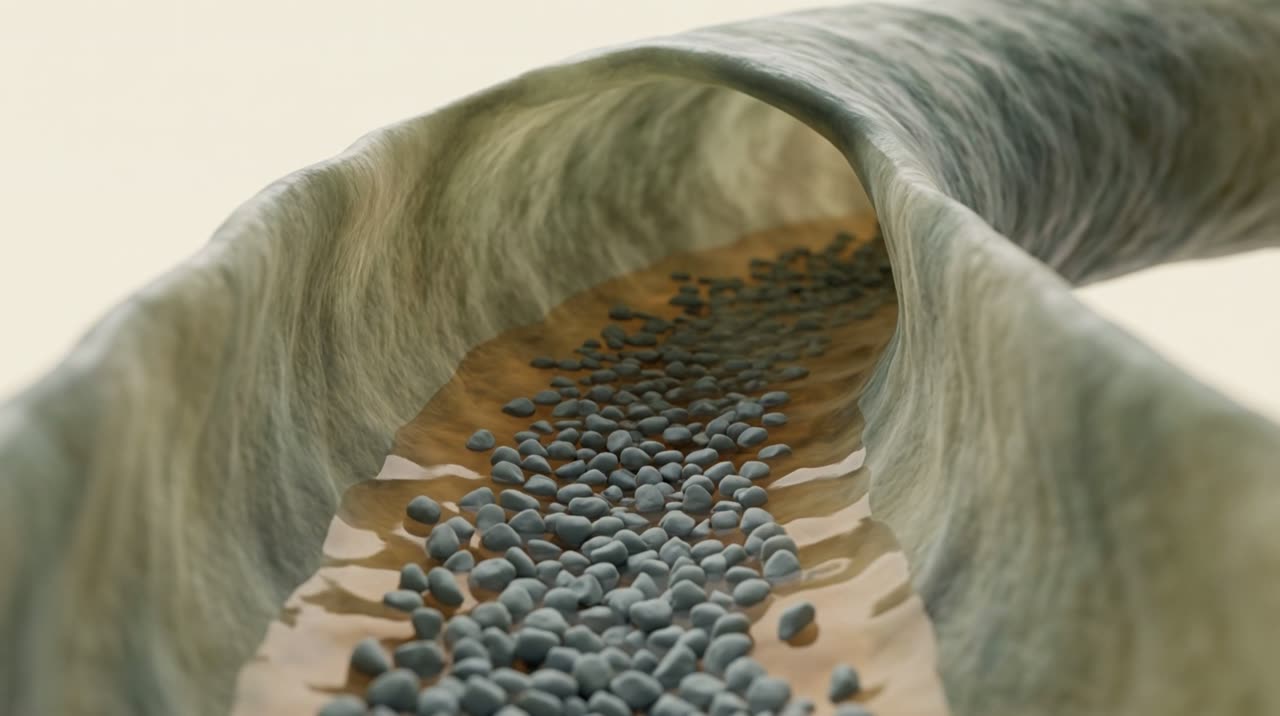
What changes at each stage
Broadly, and your vet will tailor it. The picture is the list. The numbers underneath it are the honest version of how much time that list is buying.
-
Stage 1 and 2
Mostly watching, and phosphorus
- Lower-phosphorus diet if she will take it
- Treat protein loss if there is any
- Treat blood pressure if it is high
- Do not over-treat a cat who feels well
-
Stage 3
Where the work is
- Phosphorus binders
- Subcutaneous fluids
- Antiemetics
- Potassium, if her blood says so
- Watch for anemia
- Rechecks closer together
-
Stage 4
How she feels, first
- Fluids, nausea, appetite, comfort
- Anemia treatment if she needs it
- Potassium can flip: a stage 2 dose can be harmful here
- Decided on a blood value, never last year's bottle
Median survival at stage 2 runs around three years, and half of cats beat it. At stage 3 it's about two years, with an enormous spread that the work in the middle column directly moves. At stage 4 the median is months, with a range that runs from days to years.
The other thing the stage sets is her phosphorus target, and those targets are tighter than the plain reference range on your lab sheet. IRIS puts it under 4.5 mg/dL at stages 1 and 2, then treats toward under 5.0 at stage 3 and under 6.0 at stage 4, and not below 2.7 at any stage. The full board is on the binder page. Ask your vet what they're aiming for in her specifically, rather than whether it's technically inside the printed range.
Stage, protein, pressure
Here's the part that gets left out, and it's the part I'd most want you to walk away with.
A stage on its own is an incomplete answer. IRIS asks for two more things alongside it, called substaging, and both of them are treatable problems that a blood panel won't show you.
Urine protein, measured as a UPC, the urine protein to creatinine ratio. It tells you whether her kidney filters are leaking protein. Under 0.2 is non-proteinuric, 0.2 to 0.4 is borderline, above 0.4 is proteinuric. It matters because protein loss makes the disease progress faster, and because there's a specific medication for it that your vet won't prescribe without the number.
Blood pressure. Under 140 is normal, 140 to 159 is prehypertensive, 160 to 179 is hypertensive, and 180 and above is severe. Somewhere between one in five and one in three kidney cats is hypertensive, and it usually causes no symptoms at all until it causes a permanent one, most often blindness from a detached retina. Where it can be measured, it's treated with a daily tablet and it's worth having.
The caveat on that second one: the equipment is expensive and the reading is genuinely hard to get right in a cat. I don't have a machine at my clinic, and a lot of practices don't. It doesn't stop us managing these cats well, and it shouldn't stop you feeling like your cat is being looked after properly. There's more on why, and on what to watch for instead, on the blood pressure page.
So the fullest answer to "what stage is she" has three parts. Stage, protein, pressure. The one I'd actually push for if she's never had it is the UPC, because it's cheap, it's available almost anywhere, and it changes what she's prescribed.
Does the stage tell me how long she has?
Not on its own, and I'd rather give you the honest version than a comfortable one.
The published medians run to roughly three years from diagnosis for stage 2, somewhere around two years for stage 3, and months rather than years for stage 4. Those are medians from studies that are getting old now, drawn from cats who were treated with less than we have available today, and the spread around each of those numbers is enormous. Individual cats sit a long way either side.
What predicts her course better than the stage does: whether she's eating, whether she's losing protein in her urine, and whether the treatable things alongside the kidney disease have actually been treated. Most cats are diagnosed at stage 2, and stage 2 cats commonly go on for years.
There's more on this, including how to think about the numbers without letting them run your week, on the life expectancy page.
IRIS grading for sudden kidney injury, which is a different scale
One source of real confusion, worth clearing up because the two systems share a name. IRIS also publishes a grading scale for acute kidney injury, AKI, the sudden kind caused by a toxin, a blockage, an infection, or a crash in blood supply. That scale runs from grade 1 to grade 5 and it is not the staging on this page.
The grades, briefly: grade 1 is kidney injury caught while creatinine is still inside the normal range, under 1.6 mg/dL. Grade 2 is mild, 1.7 to 2.5. Grades 3 through 5 mark increasingly severe failure, at 2.6 to 5.0, then 5.1 to 10.0, then above 10.0.
The difference that matters to you: sudden injury is graded because it can genuinely improve, and a cat can walk back down those grades with treatment. Chronic disease is staged because it's managed rather than cured. A cat can have both at once, which is what's happening when a stable kidney cat suddenly crashes, and it's exactly why the sudden jump gets worked up rather than accepted. Both scales are published free by IRIS, and the numbers on this page are from their 2026 revision.
What to do with the number you were given
Write it down with the date, along with her phosphorus, her potassium and her weight. Ask what her UPC was, and if it hasn't been done, ask for it at the next visit. Ask about her blood pressure too, and if your vet doesn't have the equipment for it, ask what they'd rather you watched for at home.
Then put it away. The stage is a tool for deciding treatment, and it does that job well. It's a poor tool for predicting the future, and it's a terrible one to sit and stare at.
If you want the values themselves explained one at a time, that's the bloodwork page.
Questions people ask me about this
- What are the IRIS stages of kidney disease in cats?
- Four bands, set mainly by creatinine drawn from a well-hydrated, stable cat. Under 1.6 mg/dL is stage 1, 1.6 to 2.8 is stage 2, 2.9 to 5.0 is stage 3, and above 5.0 is stage 4. Most cats are already at stage 2 on the day they're found. It tells your vet what to do next, not what happens next.
- How long does a cat live with stage 3 kidney disease?
- Around two years is the published median, and the scatter around it is enormous, from months to well past four years. Those figures also come from studies old enough to predate a good deal of what we give these cats now. Her appetite and her urine protein say more about her particular course than the stage label does.
- Why did my cat's stage change between visits?
- Nearly always because something other than her kidneys moved the creatinine. Being dry on the day of the draw is the usual culprit; a hidden kidney infection, constipation or a newly started drug can each do it. That's the reason a stage is supposed to come off a settled cat and be confirmed a second time.
- What is substaging, and does my cat need it?
- Substaging adds two things to the stage number: urine protein, reported as a UPC, and blood pressure. Both are treatable and neither appears on a routine blood panel. Ask for the UPC by name, because it's cheap and any practice can run it. Blood pressure depends on equipment your vet may not own, and cats are managed well without it.
- Can a cat go back to an earlier IRIS stage?
- On paper it happens, and it usually means the first number was taken on her worst day. Fluids don't rebuild kidney tissue, they let the true creatinine show. That's better information rather than a better kidney, and it's still worth having.
- Does the stage decide her treatment?
- Largely, and that's the job it does well. It sets her phosphorus target, her recheck interval, and the point at which fluids, binders, potassium and anemia treatment enter the picture. Worth knowing that the IRIS phosphorus target for the later stages sits tighter than the plain normal range printed on your sheet.
- What does IRIS stand for in veterinary medicine?
- The International Renal Interest Society, a group of veterinary kidney specialists who publish the staging system and the treatment guidelines that go with it, free, at iris-kidney.com. Whether your vet calls it IRIS kidney staging, renal staging, or CKD staging, it's the same system.
- What are the IRIS AKI grades?
- A separate five-grade scale for acute kidney injury, the sudden kind, as opposed to the four chronic stages. Grade 1 is injury caught before the blood values leave the normal range, and grades 2 through 5 track rising creatinine. Sudden injury is graded because it can improve; chronic disease is staged because it's managed.
Medically reviewed by Dr. Steve Pelton, last updated . First published . Reviewed quarterly.