 KidneyCats
 The urinalysis, and why it matters as much as the blood
The short answer
Urine answers two questions blood can't. Specific gravity shows whether her kidneys can still concentrate, which often moves before any blood value does. Urine protein, the UPC, shows whether her filters are leaking, which shortens the course and has its own treatment. Her IRIS stage is incomplete without a UPC.
Why does my vet need a urine sample for kidney disease?
Because there are two tests that matter enormously in this disease, and neither of them can be done on blood.
That's the whole answer. Blood tells you what's building up in her. Urine tells you what her kidneys are still capable of, and what they're losing that they shouldn't be.
The urinalysis is also the test that gets skipped most, everywhere, and not out of laziness. It takes longer, it costs more, and getting a sample requires either a needle or your patience. So this page exists partly so you know what to ask for.
Specific gravity, and why it moves first
Specific gravity measures how concentrated her urine is. Think of it as how much work the kidney did before letting the water go.
A healthy cat is very good at this. She evolved from a desert animal and she concentrates urine hard, typically above about 1.035 on the scale your lab uses. Plain water is 1.000.
A kidney cat loses that ability, because concentrating urine is one of the first functions to fail. The number drifts down toward 1.008 to 1.012, which is not far off water. That's why she's drinking more and why the clumps in the box are bigger: she's passing a large volume of dilute urine and drinking to keep up.
The important part: this often changes before creatinine does. A cat with a normal blood panel and urine that's already dilute is a cat whose kidneys are in trouble, and finding that early is the whole point of screening older cats.
The UPC, the test your cat may never have had
If you take one thing from this page, take this.
A UPC is the urine protein to creatinine ratio. It tells you whether the kidney's filters are leaking protein into the urine, which they shouldn't be.
Two reasons it matters more than most values on the sheet. Protein loss makes kidney disease progress measurably faster, so it's one of the few things that changes the outlook. And it has a specific treatment your vet will not prescribe without the number, because the drug is chosen and dosed against it.
Along with blood pressure, the UPC is what IRIS calls substaging. A stage on its own is an incomplete picture. If your cat has been given a stage but has never had a UPC run, that's a completely reasonable thing to ask about, and plenty of cats are in exactly that position.
One caution worth knowing: a urinary tract infection or blood in the urine will falsely raise the UPC, so it's interpreted alongside the rest of the urinalysis rather than on its own.
What else is on the report
Beyond those two, the urinalysis picks up things that change the plan.
Blood or white cells, which suggest inflammation or infection. Bacteria, which point at infection, though the absence of visible bacteria doesn't rule it out. Glucose, which raises the question of diabetes, and plenty of older cats have both. Crystals, which matter for stones. pH, which relates to the acid build-up that damaged kidneys allow.
None of these are the headline. All of them are reasons a urinalysis is a better test than a dipstick.
The urine culture, and when to insist
This one deserves emphasis because it catches something genuinely fixable.
Kidney cats get pyelonephritis, an infection in the kidney itself, and they can carry it silently. No straining, no blood you can see, no obvious signs at all. What it does is push her numbers up and make her feel unwell, and it looks exactly like the disease progressing.
It's curable with a course of antibiotics.
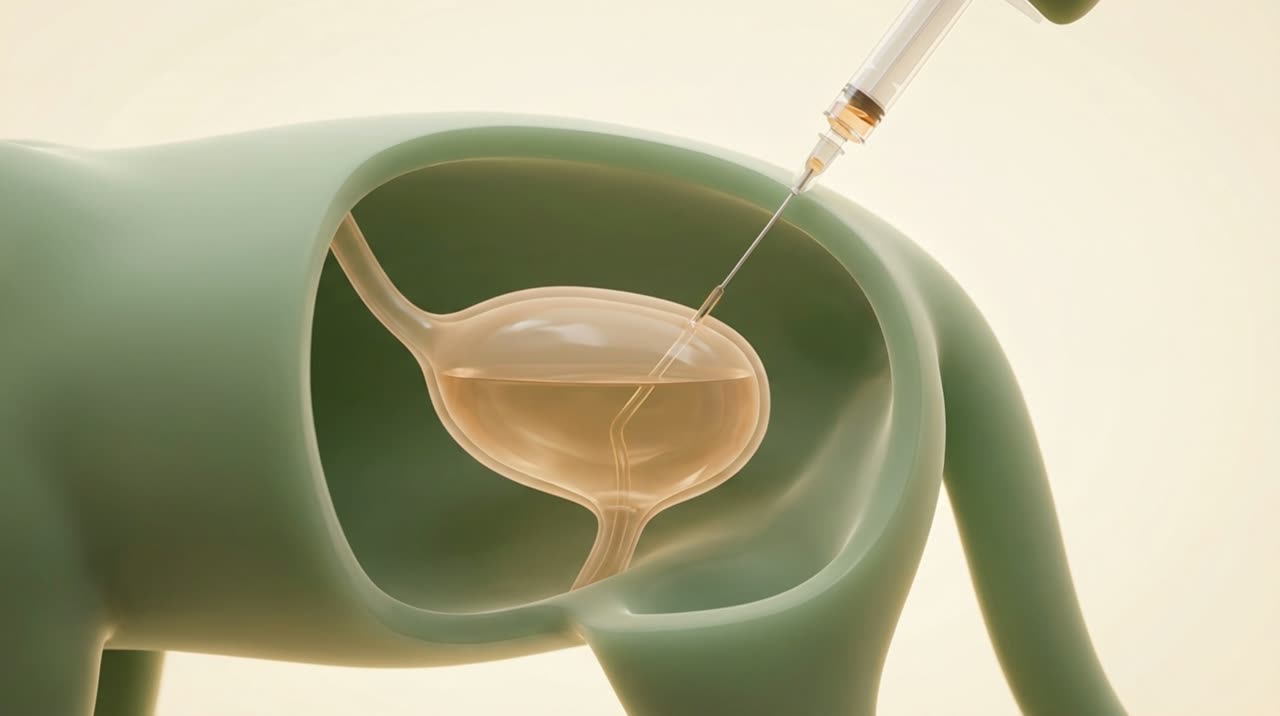
So if she was stable and her numbers have got worse without an obvious explanation, this is the test to ask for by name: a urine culture collected by cystocentesis. A dipstick doesn't rule out an infection, and a sample she produced in the litter box is too contaminated for a culture to be trustworthy.
Collecting a sample at home
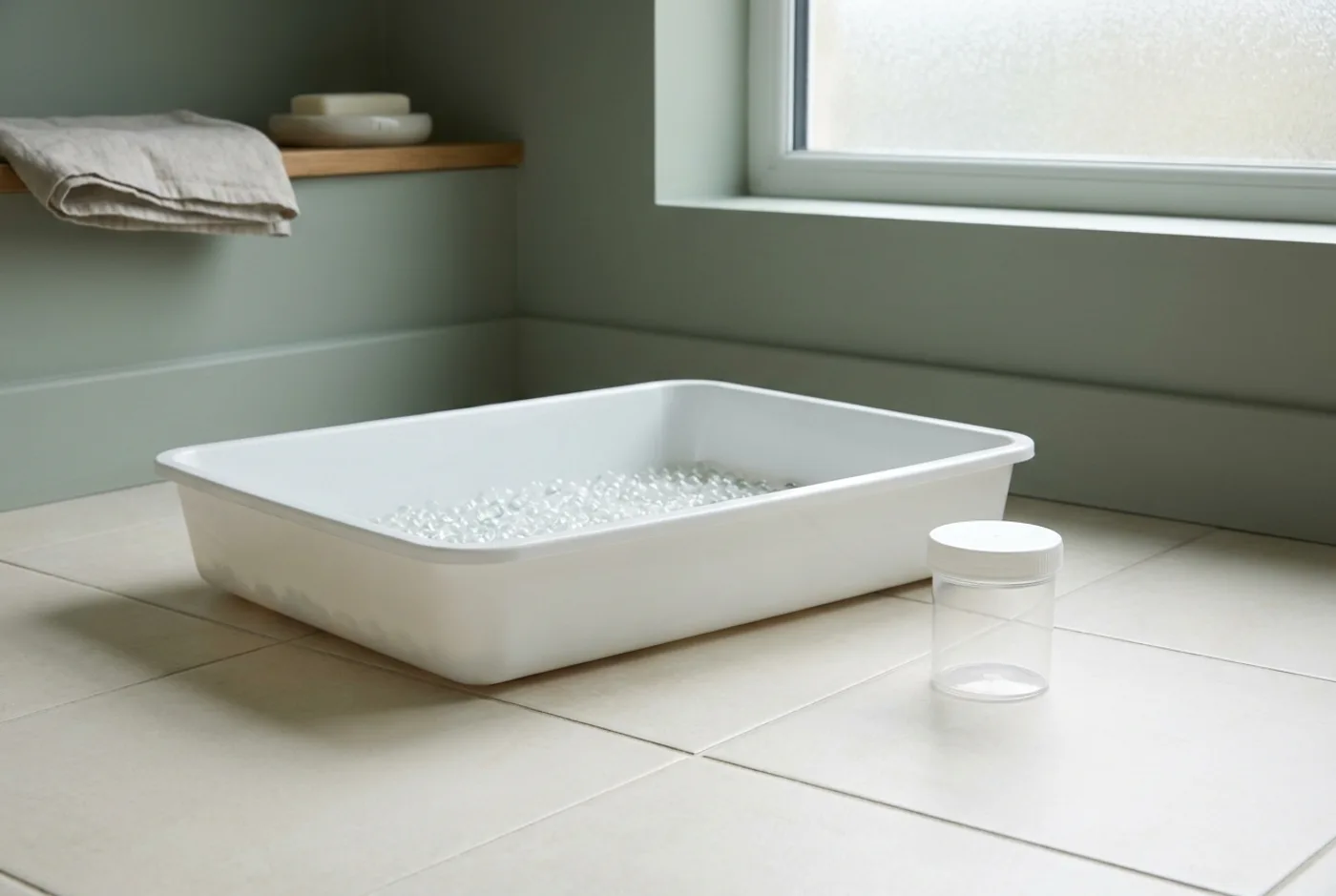
Often worth doing, and it saves a needle and some stress. Ask your clinic for non-absorbent litter, which is small plastic beads that let urine pool at the bottom of the tray so you can pour it into a pot.
How to make it work:
- Empty and rinse the box, add the beads, and leave her to it. No normal litter mixed in.
- If you have several cats, shut her in a room with the box and no other options for an hour or two.
- Pour the sample into whatever clean pot your clinic gave you.
- Refrigerate it and get it in within a few hours. A sample that has sat at room temperature all day gives misleading results, and bacteria multiply in it.
- Note the time you collected it.
What it's good for: specific gravity, a UPC, and the routine dipstick and sediment. What it can't do: a reliable culture.
Two practical notes. First morning urine is the most concentrated and often the most useful. And if she's the sort of cat who will not perform under observation, don't turn it into a battle, just tell your vet and let them collect it.
Collecting a sample at home
Video coming. I'm filming these myself.
Where this fits
Urine is the part of a recheck that gets skipped most, and it's the one most likely to change treatment. It also needs no special equipment, which is why it's the one I'd ask for by name: can we get a urine sample while she's here. Blood pressure belongs in the same conversation, with the caveat that plenty of clinics, my own practice being one, don't have a machine for it.
What a full recheck should include and how often, is on the recheck page. What each blood value means is on her bloodwork, translated. And the substaging point, why a stage alone is only half an answer, is on the IRIS stages page.
Questions people ask me about this
- Why does my vet need a urine sample for kidney disease?
- Because two of the most useful tests in this disease exist nowhere else. Specific gravity shows whether she can still concentrate urine, which usually slips before anything on the blood panel moves. The UPC shows whether her filters are leaking protein, which speeds the disease up and has its own treatment.
- What is urine specific gravity in cats?
- A number for how concentrated her urine is. A healthy cat runs above about 1.035; a kidney cat drifts down toward 1.008 to 1.012, which is not far off tap water. It's often the first thing in the whole disease to move.
- What is a UPC and why does my cat need one?
- Urine protein to creatinine ratio. Under 0.2 is normal, 0.2 to 0.4 is borderline, above 0.4 is proteinuric. Leaking protein makes the disease run faster, and there's a medication for it your vet won't reach for without the number in front of them.
- How do I collect a urine sample from my cat at home?
- Ask your clinic for non-absorbent litter, the little plastic beads that let urine pool so you can pour it into a pot. Empty the box, add the beads, wait, then refrigerate what you get and have it in within a few hours. Fine for gravity and a UPC, no use at all for a culture.
- What is cystocentesis, and is it painful?
- A fine needle through the belly wall into the bladder, usually with an ultrasound showing the way. It takes seconds, and most cats mind it less than having their nails done. It's the only route to a sample clean enough to culture.
- Why would my cat need a urine culture?
- Because a silent kidney infection is one of the commoner reasons a stable cat's numbers fall apart, and it's curable. Kidney cats carry these with no straining, no blood, and nothing you would notice. A dipstick won't rule it out, so ask for a culture collected by cystocentesis by name.
Medically reviewed by Dr. Steve Pelton, last updated . First published . Reviewed quarterly.