 KidneyCats
 Giving fluids when it goes wrong
The short answer
Almost every fluids problem has a mechanical cause you can fix: fluid that's too cold, a dull needle, a flow that's too slow, or a needle that has gone through and out the other side. A soft lump that travels downward over a few hours is normal. Four things aren't, and they're at the bottom of this page.
Why does my cat cry when I give her fluids?
Usually one of three things, and they're all mechanical rather than a sign you're doing something cruel.
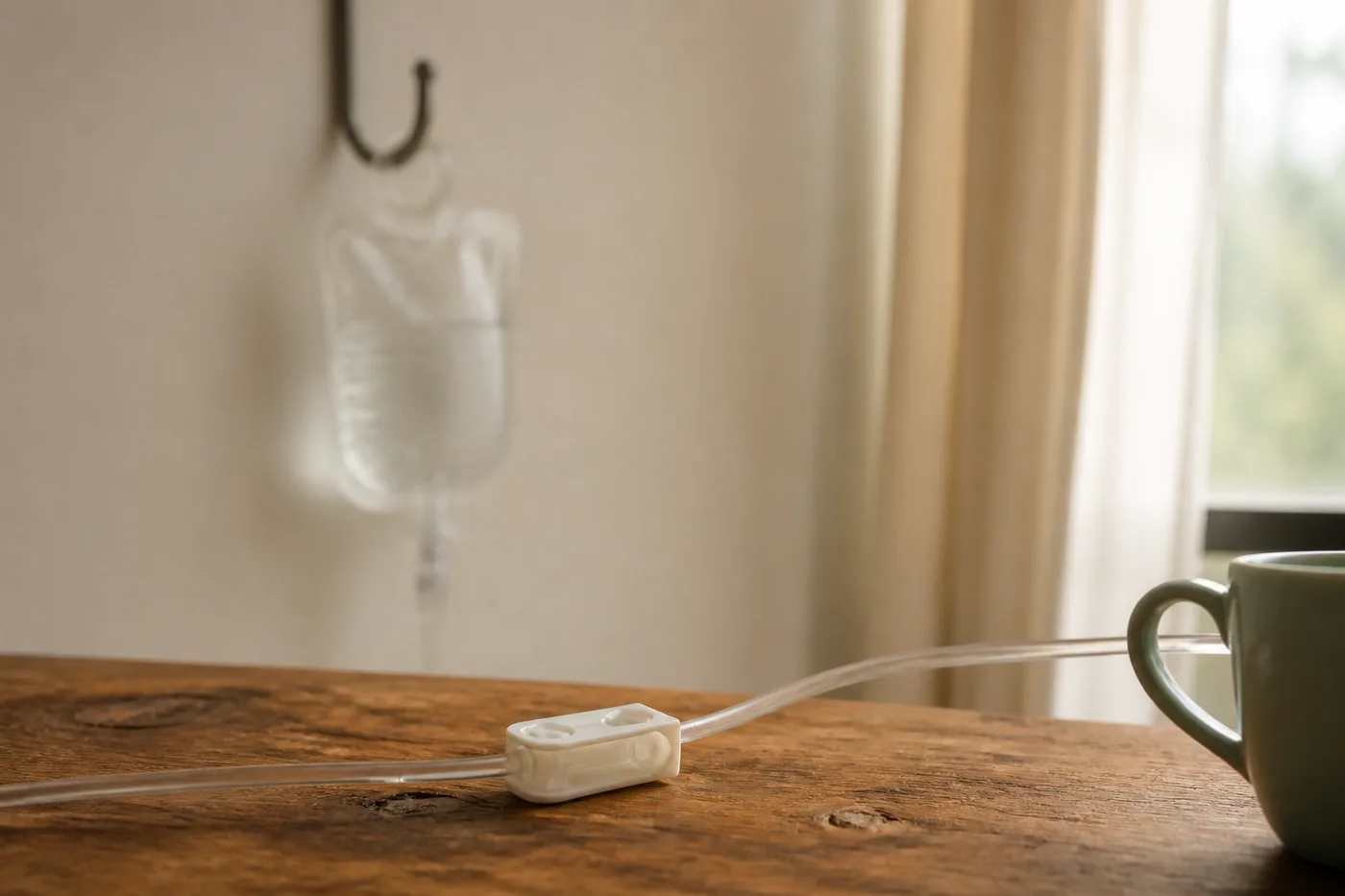
The fluid is too cold. This is the most common cause by a long way. Room-temperature fluid feels cold going under the skin, and cold under the skin is genuinely unpleasant. Stand the bag in a sink of hot tap water for about ten minutes before you start. Never microwave it: it heats unevenly and you can't tell by feel that part of it is scalding.
The needle is dull. A fresh needle every single session. Not every second session, not "it looks fine". Needles blunt on the first pass through skin, and a blunt needle drags. This is the cheapest fix on the page.
It's running too slowly. A slow session is a long session, and the length is what she objects to. Hang the bag higher, which is the whole trick: a coat hook, a curtain rail, the top of a door. And use an 18 gauge needle rather than a thinner one. Wider sounds worse and is kinder, because it's over sooner.
Fix those three in that order and most crying stops. A cat who still cries every time despite all three is worth mentioning to your vet, because occasionally there's something else going on.
The lump, which is supposed to be there
The single most common panic on day three, and it's normal.
There'll be a soft swelling where the fluid went in. That is the fluid, sitting under the skin, being absorbed over the next few hours. It's meant to happen.
It moves. Gravity pulls it downward, so over a few hours it can migrate to her chest, her armpit, or down a front leg. Cats sometimes limp a little because of it. This looks alarming and it's fine.
What normal looks like: soft, not hot, not tender, and gone within about twelve hours.
What isn't normal: hot, hard, painful, or still there the next day. That's a phone call.
Everything else that goes wrong, and what to do
The needle popped out mid-session. Happens to everybody. Stop the flow, throw that needle away, put a fresh one on, start again in a slightly different spot. Never put a used needle back in your cat, both because it's dull now and because it isn't clean.
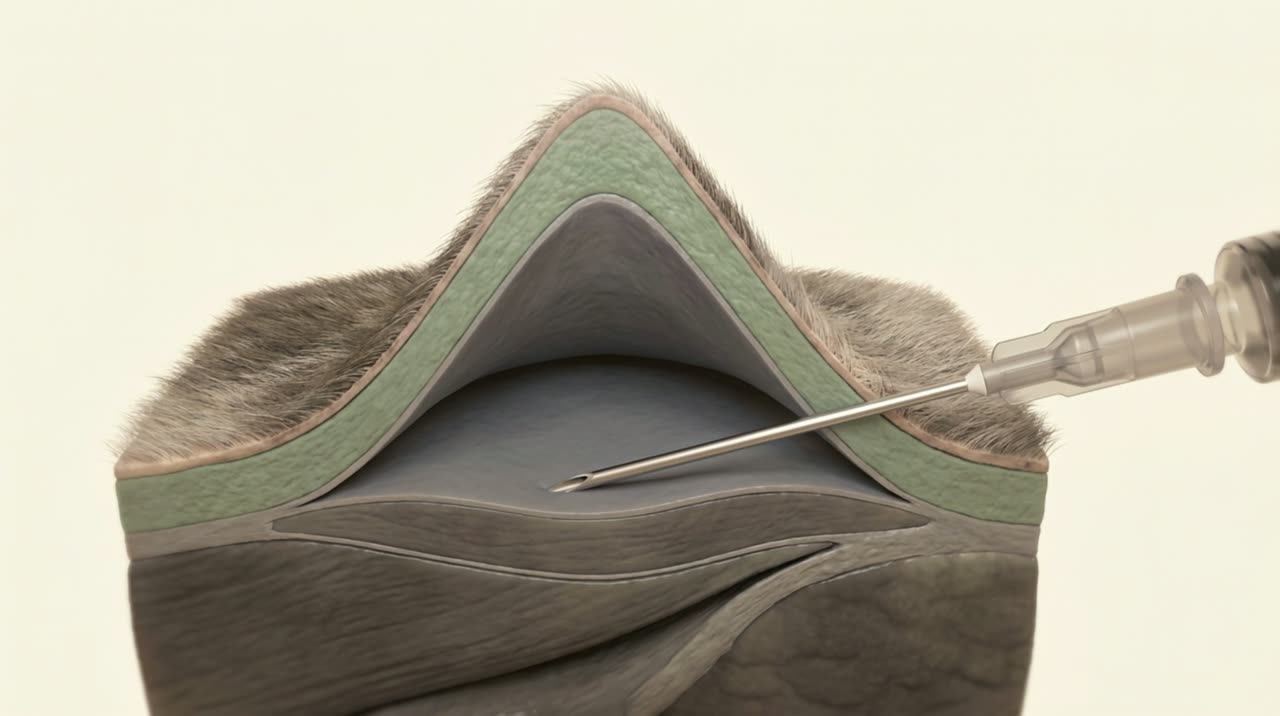
Nothing's coming out of the bag. Check three things in order: is the roller clamp fully open, is the bag high enough, and is the needle actually in the pocket. If the drip chamber isn't moving at all, the needle is either not in yet or it's gone straight through the tent and out the other side, which is the usual answer.
Fluid is running down her side while the bag is going. That's the through-and-out problem. The fluid is coming out the far side of the skin tent instead of into the pocket. Stop, fresh needle, go again slightly to one side, and go in flatter, more parallel to her spine rather than aiming down at her back.
A bead of blood at the site. You nicked a tiny vessel. Pressure for a few seconds and it stops. Nothing to do.
A few drops leaking after you pull the needle out. Normal. Pinch the skin closed for a few seconds.
Air in the line. Harmless here. This is under the skin, not a vein. Run the line through before you start because it's tidier and it makes the flow easier to read, but a bubble getting through does nothing.
The line kinks or the bag collapses oddly. Normal as the bag empties. Straighten the line, and don't squeeze the bag to speed things up unless your vet has shown you how, because you lose track of the volume.
You lost count of how much went in. Mark the bag with a permanent marker at the start line and the target line before you begin. Guessing is how cats get too much, which is a real problem rather than a theoretical one.
The behavioural side, which nobody warns you about
Around week two or three she works out the sequence. The bag comes off the hook, so she disappears under the bed.
That's learning, not fear of pain, and you fix it by changing what she's predicting.
- Set up completely out of her sight. Everything ready, needle attached, line run, before she's anywhere near the room. Cats read fumbling.
- Leave the bag hanging up all the time, so it stops being a signal. If it lives on the hook, seeing it means nothing.
- Change the room or the time of day. Sometimes that alone resets it.
- Feed her something excellent the instant the needle is out. Every time, immediately, no exceptions. Tuna, a lick of chicken, whatever she'd sell you for. You want her associating this with the best thirty seconds of her day.
- Don't apologise to her at length beforehand. She reads your tone as evidence something bad is coming. Brisk and boring beats gentle and drawn-out.
- Don't chase her. If she's gone to ground, wait an hour. A session she was hauled out from under a bed for costs you the next three.
The routine that stops her hiding
Video coming. I'm filming these myself.
Things people do that don't help
Shaving her. Unnecessary and it makes the skin harder to tent.
Wiping with alcohol. It stings, and it doesn't sterilise skin in the few seconds you'd use it. Clean hands and a fresh sterile needle are what actually matter.
Buying a shorter or thinner needle to be kind. Thinner means slower means longer, and longer is the thing she hates.
Waiting until you feel confident. You won't feel confident before, only after. The first one takes twenty minutes and you'll shake. The fourth takes four minutes.
Increasing the amount because she seems dehydrated, or skipping sessions because she seems fine. Both are decisions for your vet. Too much fluid is a genuine risk in a cat with heart disease or high blood pressure.
Where to go from here
The full walkthrough, including the setup and the technique, is on the subcutaneous fluids page. If she's off her food around sessions, that's usually nausea rather than the fluids themselves.
And if after all of this it still isn't working in your hands, say so at the next visit. There are cats who get their fluids at the clinic twice a week instead, and that's a legitimate plan rather than a failure.
Questions people ask me about this
- Why does my cat cry when I give her fluids?
- Cold fluid, a blunt needle, or a session running so slowly it drags. Warm the bag for ten minutes in hot tap water, use a new needle every time, and hang it higher. Most cats who complain are complaining about the temperature.
- There's a big soft lump where the fluid went in. Is that normal?
- That's the fluid, sitting exactly where it should until she absorbs it. It travels downward over a few hours and can finish at her chest or down a leg, sometimes with a brief limp. Soft, cool and gone within about twelve hours.
- The fluid leaked back out. Did she get any?
- A few drops afterwards is normal, and pinching the skin shut for a few seconds stops it. A steady stream running down her side while the bag is still going means the needle isn't in the pocket, usually because it went through and out the far side. Stop, fresh needle, restart slightly to one side.
- Is air in the line dangerous for subcutaneous fluids?
- No. This isn't a vein, and small amounts of air under the skin do nothing at all. Run the line through first because it's tidier and you can see the flow, but a bubble getting past is not an emergency, whatever it feels like at the time.
- My cat hides as soon as she sees the bag. What do I do?
- She's learned the sequence, which is normal and fixable. Break the prediction: set up out of sight, use a different room, change the hour, and hand her something excellent the instant the needle comes out, every single time. Leaving the bag hanging permanently stops it being a signal at all.
- When should I stop and call the vet about fluids?
- Breathing fast, wetly, or with effort after a session, which matters most in a cat with a murmur. A lump that's hot, hard, sore, or still there twelve hours later. Skin over the site going dark, scabbed or open. Or her going flat and off her food after sessions when she wasn't before.
Medically reviewed by Dr. Steve Pelton, last updated . First published . Reviewed quarterly.